

Customer story · Brooklyn Clinical Research
How Brooklyn Clinical Research Drove 88% Participant Engagement and Turned Feedback into Action
Impact in numbers
Participant engagement
Feedback rate
Visit score
To go-live

Brooklyn Clinical Research drives 88% participant engagement and turns feedback into action with Stitch.
Brooklyn Clinical Research (“BCR”) draws on one of the nation’s most diverse communities. When Director of Operations Alex Almeida looked for a better way to engage participants with no manual work for the team, he turned to Stitch.
“We used Hubspot and Outlook for generic followups but these were not study specific ‑ appointment reminders did not have specific info. Our CRC’s didn’t like the process and had to individually chase participants and confirm appointments. Those that did confirm were not showing up prepared, with incorrect meds etc.”

Alex Almeida
Director of Operations, Brooklyn Clinical Research

The team decided to replace their manual process with Stitch’s patient engagement solution. Implementation took less than two weeks, and with Stitch fully integrated into their CTMS, there was no extra work for site staff when the system went live.
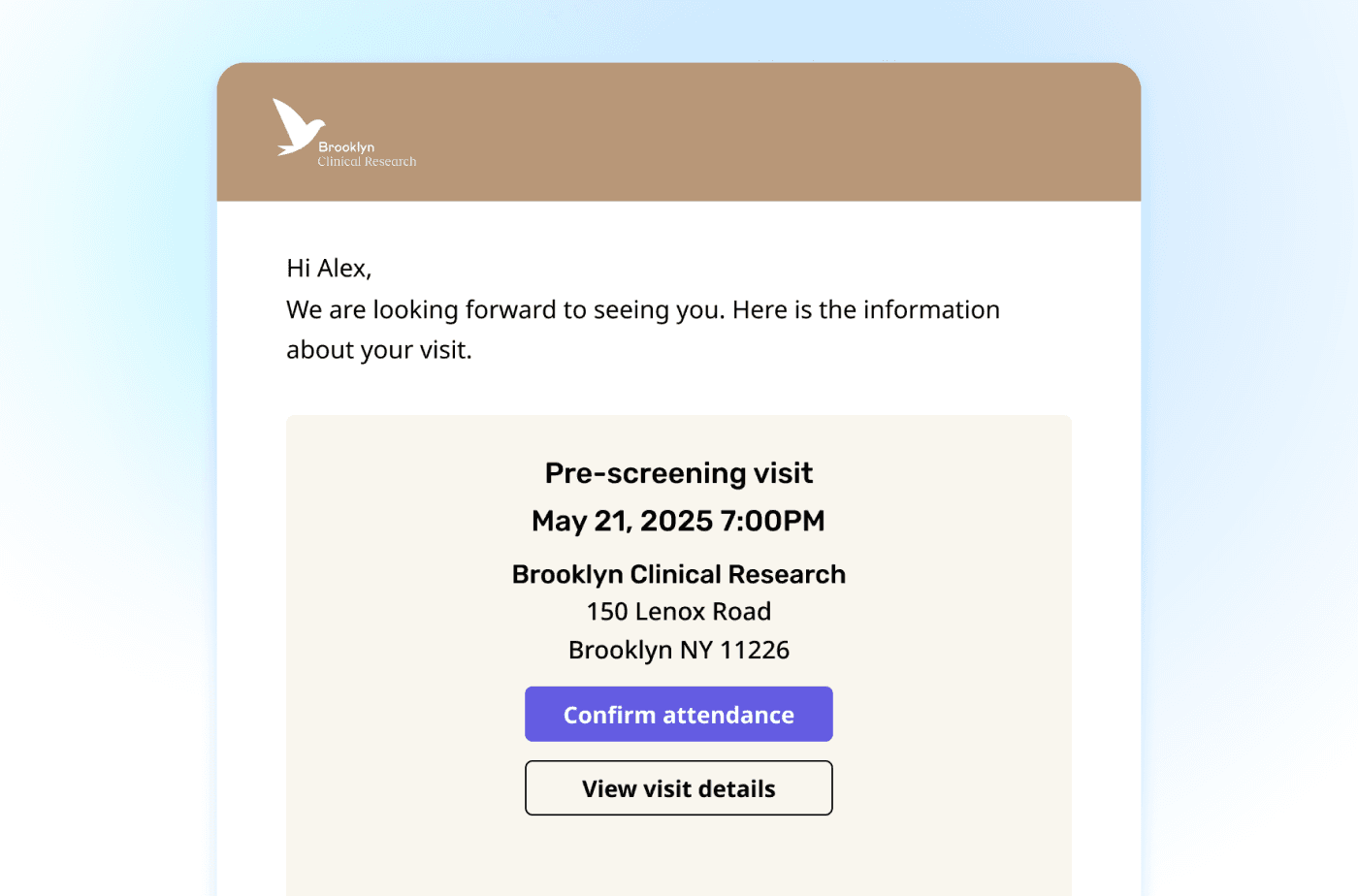
Every BCR participant now gets automated SMS and email reminders, feedback surveys and access to a web-app in Brooklyn’s branding - no app download or password needed.
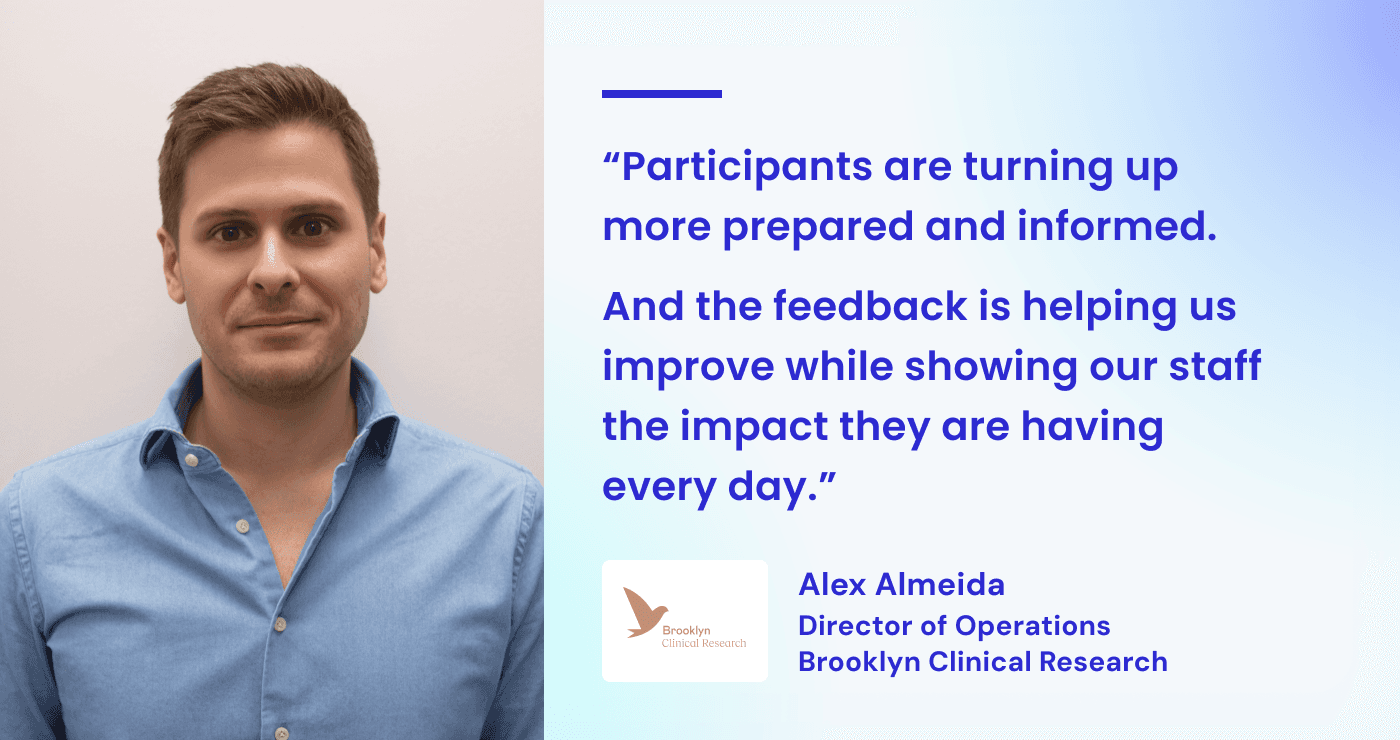
“We have had lots of replies to the emails to cancel / reschedule appointments which is much more efficient than what we were doing previously. People are turning up more prepared and informed. And the feedback is helping us improve while showing our staff the impact they are having every day.”
Alex Almeida
Director of Operations, Brooklyn Clinical Research
Jonathan Moshinsky, CEO at Stitch said about the partnership:
“Alex and the Brooklyn Clinical Research team see their participant experience as vital to everything they do. We were delighted to see such overwhelmingly positive feedback from their participants as well as useful opportunities for improvement.”

Jonathan Moshinsky
CEO at Stitch

Participant voices
“Everyone was kind, professional and thorough. My appointment was smooth and brief. Really appreciate the Ubers too.”

Vaccine study participant
Brooklyn Clinical Research
“A team that is welcoming, that took time to answer my questions and concerns, and the facility was very clean and inviting.”
Screening visit participant
Brooklyn Clinical Research
“From the moment I walked in the door I was treated with professionalism and kindness… If I sound overly enthusiastic, it’s because her service was indeed exceptional.”
Therapeutic study participant
Brooklyn Clinical Research
About Brooklyn Clinical Research
Brooklyn Clinical Research (“BCR”) was founded to increase access to clinical trials for underrepresented populations. Clinical-trial enrollment should accurately represent the broader population. BCR is consistently a high-enrolling site, focused on recruiting a diverse, representative participant population at scale so that sponsors can meet trial-enrollment goals more quickly. For more information, visit brooklynclinicalresearch.com.
About Stitch
Stitch is the only patient engagement platform purpose‑built for research sites. We make it easy for sites to support trial participants from the first time they click on an ad through the end of their trial. Sites that use Stitch ensure participants show up ready for every visit, reduce no‑shows and shorten enrollment, improving the overall trial experience for both sites and participants.